
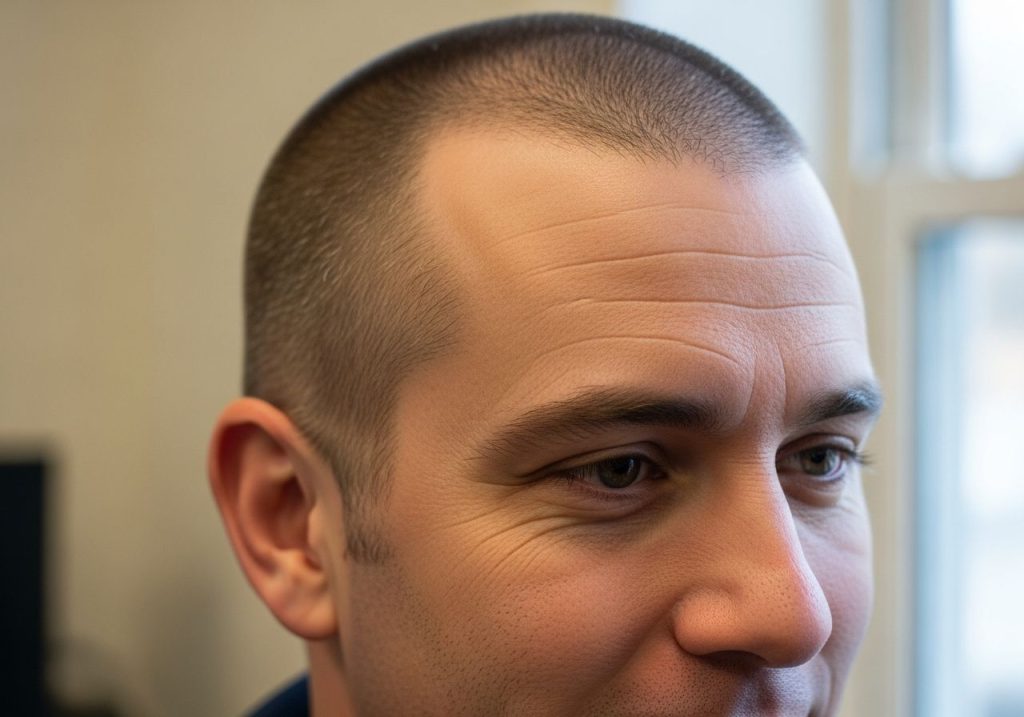
You have accepted the hair loss and you are drawn to the clean, shaved look, but you are not sure whether to go down the surgical route or explore scalp micropigmentation. Both promise a result; only one actually delivers the shaved aesthetic without a long recovery or a waiting game. Here is an honest side-by-side comparison so you can decide with confidence.
1. SMP is built for the shaved look; a transplant is not
Scalp micropigmentation works by depositing medical-grade pigment into the scalp in tiny, stippled dots that replicate the appearance of shaved hair follicles. The result is a consistent, closely cropped look across the entire scalp. It is designed from the ground up for this aesthetic.
A hair transplant moves living follicles from a donor zone to thinning areas so that real hair can grow. That is a fundamentally different goal. If you want to wear your hair short or shaved, a transplant still leaves you managing growth, coverage, and the visible donor scar along the back of your head. SMP sidesteps all of that.
2. The cost difference is significant
SMP for a shaved-head result typically runs between $1,500 and $3,500 across two to four sessions, depending on the degree of coverage needed. A hair transplant procedure can cost anywhere from $4,000 to $15,000 or more, and many men with advanced hair loss need more than one procedure to achieve anything close to satisfactory density.
It is worth factoring in touch-ups too. SMP pigment naturally fades over time due to UV exposure and skin turnover, so a maintenance appointment every three to five years is typical. That is a predictable, manageable cost. Transplant revision surgery is a different financial conversation entirely.
3. Recovery from SMP is measured in days, not months
After SMP, the aftercare is straightforward: keep the scalp dry for the first four days, avoid shampoo and sweating, and stay out of direct sun. By day ten you can return to gentle normal washing, and full healing is complete around the 30-day mark. Most people are back to daily life within a week.
A hair transplant is a surgical procedure. Swelling, scabbing, and tenderness are standard in the first two weeks. The transplanted hair sheds before it regrows, and the final result is not visible for nine to twelve months. If you are after a quick, clean outcome, that timeline matters.
4. SMP works for candidates a transplant cannot help
Hair transplant surgery requires a healthy donor zone, meaning enough existing hair at the back and sides of the scalp to harvest follicles from. If you have advanced alopecia, diffuse loss across the whole scalp, or a scarring alopecia, there may simply not be enough donor hair to work with. In those cases, a transplant is not an option.
SMP works across alopecia areata, alopecia totalis, pattern baldness at any stage, chemotherapy-related hair loss, and scalp scarring. It is also highly effective at camouflaging the strip scars that hair transplant surgery leaves behind. The pool of suitable candidates for SMP is considerably wider.
5. The shaved result from SMP is immediate and consistent
Walk out of your final SMP session and the result is essentially there. You will see a uniform, realistic representation of a shaved scalp with natural hairline definition. There is no waiting, no patchy regrowth stage, and no period of uncertainty about whether the result will turn out as hoped.
With a hair transplant, even a successful procedure goes through an awkward phase in which the transplanted grafts shed before new growth comes through. The final look at twelve months can be genuinely impressive, but it can also fall short of expectations if density was optimistic or hair loss has continued in untreated areas. SMP delivers a consistent, predictable outcome from the first day of healing.
The work done with SMP at Carolina Scalp Center grew directly from personal experience with both sides of this comparison. Mike Greene spent over two decades navigating multiple strip and FUE transplant surgeries before discovering SMP in 2012. The short hairstyles he wanted were off the table until then because donor scarring was always visible. That firsthand knowledge shapes every conversation with clients weighing up these two options. Neither path is wrong, but for the shaved look specifically, SMP is the more direct route to a result you will actually be happy wearing.
Frequently Asked Questions
Does SMP look natural on a completely bald head?
Yes. Scalp micropigmentation uses a stippling technique to replicate the look of shaved hair follicles across the scalp. When performed at the correct pigment depth and dot density, the result closely mimics a freshly shaved head, with a defined hairline and consistent coverage across bald or thinning areas.
Can SMP cover the scars left by a hair transplant?
SMP is one of the most effective ways to camouflage strip and FUE donor scars. Pigment is deposited into and around the scar tissue to blend it visually with the surrounding scalp. Results vary slightly depending on scar texture and width, but most clients see a significant reduction in scar visibility after two to three sessions.
How long does SMP last on a shaved head compared to a hair transplant?
SMP pigment typically lasts three to six years before a touch-up is needed, with fading driven by UV exposure, skin turnover, and lifestyle factors. A successful hair transplant produces permanent follicles that continue to grow, but those follicles can still thin over time as natural hair loss progresses in untreated areas.
Is SMP painful compared to hair transplant surgery?
SMP is generally described as mild to moderate discomfort, similar to a light scratching sensation. Most clients tolerate sessions of one to five hours without difficulty. Hair transplant surgery is a more involved procedure requiring local anaesthetic, with post-operative soreness, swelling, and a longer, more demanding recovery period by comparison.
Who is not a suitable candidate for scalp micropigmentation?
Active scalp acne, psoriasis flare-ups, eczema, and keloid-prone skin are recognised contraindications for SMP. A consultation is essential to assess your scalp condition before booking sessions. Most people with hair loss, including those with alopecia totalis or significant pattern baldness, are good candidates once any active skin conditions are managed.