
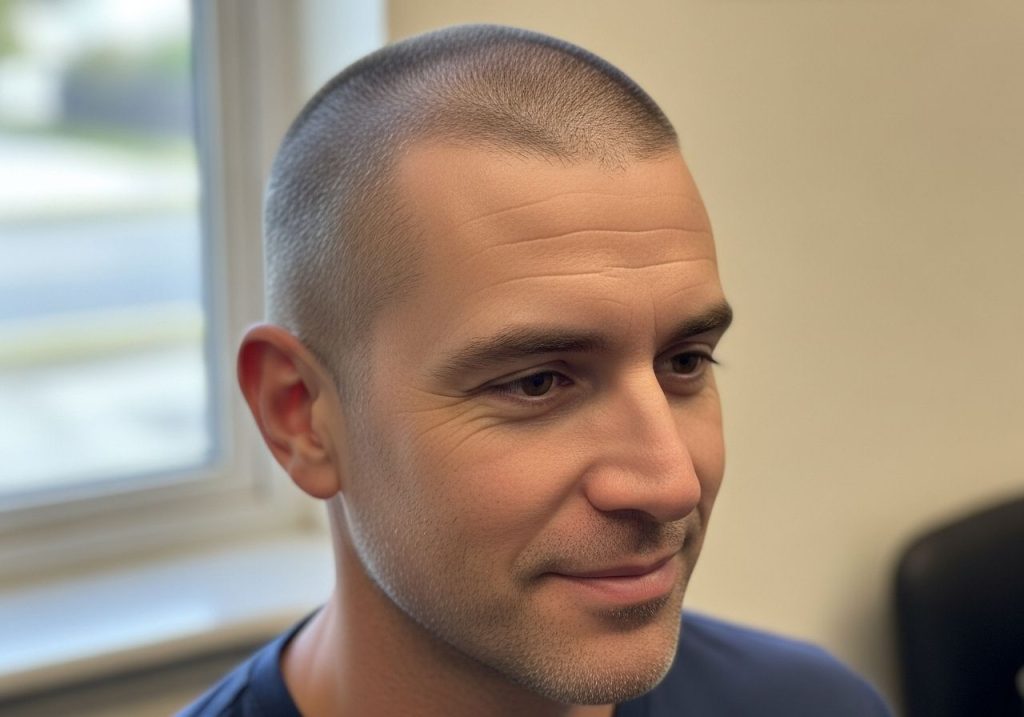
You have done the research, you like what you see, and you are seriously considering a hair tattoo. But before you book anything, there is a question worth sitting with honestly: are you actually a good candidate? This article walks you through the specific skin conditions, medical factors and hair loss patterns that can affect your results, so you can make that decision with real information.
Skin conditions that make SMP a risky choice
Scalp micropigmentation works by depositing pigment into the upper layer of the dermis. If the skin on your scalp is actively inflamed, compromised or prone to abnormal healing, that process becomes unpredictable, and the results can reflect it.
Active psoriasis on the scalp is one of the clearest contraindications. The Koebner phenomenon means that traumatising psoriatic skin, even with a needle, can trigger new plaques directly along the treatment area. If your psoriasis is currently in remission and has been stable for a meaningful period, that conversation changes, but active flare-ups are a firm no.
Active eczema follows the same logic. Inflamed, broken or weeping skin will not hold pigment consistently, and the risk of infection from an open wound on the scalp is real. If your eczema cycles in and out of flares, timing your sessions during a stable window is essential, not optional.
Keloid-prone skin is the most serious consideration of all. If you have ever developed raised, thickened scar tissue after a cut, piercing or surgery, there is a genuine risk that the needle work involved in a hair tattoo could trigger the same response on your scalp. That is not a risk worth taking lightly. At Carolina Scalp Center, Mike Greene has seen first-hand how important this conversation is, having lived through multiple hair transplant procedures himself, including dealing with visible scarring along the back of his head. He knows exactly what poorly healed scalp tissue looks like and how to assess it honestly.
Medications and medical conditions that affect healing
Some of the most overlooked scalp micropigmentation contraindications are not visible on the skin at all. They are in your medicine cabinet or your medical history.
Blood thinners, including warfarin, aspirin taken regularly, and certain supplements such as fish oil and vitamin E, slow clotting and increase bleeding during the procedure. More bleeding means pigment disperses less predictably, which affects how cleanly the dots settle. This does not automatically disqualify you, but it is a conversation your practitioner needs to have before session one.
Immunosuppressant medications, used for conditions including rheumatoid arthritis, Crohn’s disease and post-transplant care, slow the body’s healing response. The scalp needs to heal properly between sessions for pigment to settle at the right depth. Slower healing can mean unpredictable fading or uneven retention across the treatment area.
Accutane (isotretinoin) is a particular concern. It dramatically alters how skin heals and how it responds to pigment. Most experienced practitioners will ask you to wait at least twelve months after finishing a course before proceeding with any cosmetic tattooing, including SMP. If you are currently taking it, the answer is simply: not yet.
Chemotherapy-related hair loss is a different matter entirely. SMP is a recognised option for people experiencing hair loss during or after chemotherapy, and in many cases it is an excellent one. Timing matters, but the diagnosis itself is not the barrier.
How alopecia type affects your results
SMP for alopecia is effective across a wide range of presentations, but the type and behaviour of your alopecia matters significantly when it comes to predicting how well results will hold.
Androgenetic alopecia, the most common pattern affecting at least 50% of men by age 50 and one in three women, responds very well. The hair loss is stable and progressive in a predictable pattern, which makes SMP planning straightforward. Pigment retention in these cases tends to be strong, and the 2025 case series from Chongqing Medical University reported 85.7% of androgenetic patients describing themselves as very satisfied at six-month follow-up.
Alopecia areata is more complicated. Because it involves patchy, often unpredictable loss that can resolve and return, the pigmented areas may eventually be surrounded by regrown hair of a different shade or texture. This does not make SMP impossible, but it means the visual outcome can shift over time in ways that require more maintenance sessions. If your areata is currently active and spreading, waiting for a more stable period is the more practical approach.
Alopecia totalis and alopecia universalis, where hair loss is complete, raise a different question: pigment retention on scalp skin that has never had active follicular activity can behave differently. Results are achievable, but greater fading over time is a realistic expectation, as the 2025 data confirms for scarring alopecia cases. Setting that expectation clearly before you commit is important.
SMP for scar tissue, including post-transplant scarring and traumatic scars, is one of the most compelling uses of the technique. Mike’s own journey through strip and FUE surgeries, and the visible scarring those left behind, is a large part of why he became an SMP artist. Scar tissue absorbs pigment differently from normal scalp skin, often requiring additional sessions to build density, but the camouflage results can be genuinely transformative. The caveat is that keloid scarring, as noted above, is a different category entirely.
A quick checklist before you book a consultation
Use this as a starting point to assess your own situation honestly before you pick up the phone.
- Do you currently have active psoriasis, eczema or any other inflammatory skin condition on your scalp?
- Do you have a personal history of keloid scarring anywhere on your body?
- Are you currently taking blood thinners, immunosuppressants or isotretinoin?
- Is your alopecia areata currently active and spreading rather than stable?
- Do you have scalp acne that is currently flaring?
- Are you prone to very oily skin, or do you spend significant time in direct sun without SPF?
If you answered yes to any of these, it does not necessarily mean SMP is off the table. It means you need a thorough consultation where these factors are discussed openly. A practitioner worth working with will tell you honestly if now is not the right time, rather than take your booking regardless.
The right candidate for a hair tattoo is someone whose skin is stable, whose medical picture is clear and whose hair loss pattern suits what SMP can realistically deliver. Get that alignment right, and the results speak for themselves.
Frequently Asked Questions
Can I get SMP if I have psoriasis on my scalp?
Not during an active flare. Psoriatic skin can respond to needle trauma by developing new plaques along the treatment area, a response called the Koebner phenomenon. If your psoriasis has been in remission and is genuinely stable, you may be a candidate, but this requires an honest assessment from an experienced SMP practitioner before proceeding.
Does keloid scarring disqualify me from scalp micropigmentation?
It is one of the most serious contraindications in SMP. If you have ever developed raised, thickened keloid scars after a piercing, cut or surgery, the needle work involved in a hair tattoo carries a real risk of triggering the same response on your scalp. This is not a risk most experienced practitioners will take, and it should not be one you dismiss lightly either.
Is SMP a good option for alopecia areata?
It can be, but the unpredictable nature of alopecia areata complicates long-term results. If patches resolve and hair regrows around pigmented areas, the visual outcome can shift over time. SMP works better when areata is stable rather than actively spreading. Alopecia totalis is achievable but typically requires more maintenance sessions due to greater pigment fading over time.
Which medications affect scalp micropigmentation results?
Blood thinners can increase bleeding during the procedure, affecting how cleanly pigment settles. Immunosuppressants slow healing between sessions, leading to uneven retention. Isotretinoin (Accutane) significantly alters how skin heals, and most practitioners recommend waiting at least twelve months after finishing a course before booking any SMP treatment.
Can SMP cover hair transplant scars?
Yes, and it is one of the most effective uses of the technique. Strip and FUE surgery can leave visible scarring along the back of the scalp, and SMP deposits pigment into that scar tissue to visually blend it with the surrounding area. Scar tissue typically requires more sessions to build adequate density, but the camouflage results are often significant for the right candidate.