
You’ve still got hair, but it’s thinning. You can see more scalp than you used to, and certain lighting makes it look worse than it feels. You don’t want a shaved-head transformation; you want your hair to look fuller. This article explains exactly how male density SMP works, what the healed result actually looks like, and whether your hair and skin type make you a good candidate.
What male density SMP does differently from a full treatment
Scalp micropigmentation for thinning hair in men is not the same as the classic shaved-head SMP most people picture. The goal here is not to create a buzz-cut illusion across a bald scalp. It is to deposit pigment dots between your existing hairs so that the visual contrast between hair and scalp is reduced, making the whole area read as denser.
Think of it as pointillism applied to your scalp. Each dot is placed to mimic the cross-section of a real hair follicle, and when you step back, the cumulative effect is the appearance of greater coverage. The pigment sits at the epidermal-upper dermal interface, around 1.5 to 2 millimetres into the dermis, deep enough to last yet shallow enough to keep the dots looking crisp rather than blurred.
Because the work is carried out around live hair rather than across bare skin, the technique requires a lighter touch and greater precision. Dot density typically builds from around 40 dots per square centimetre in the first session, increasing to 80 to 100 dots per square centimetre by the final one. That progressive layering is what makes the result look natural rather than painted on.
How needle choice and dot placement shape the result
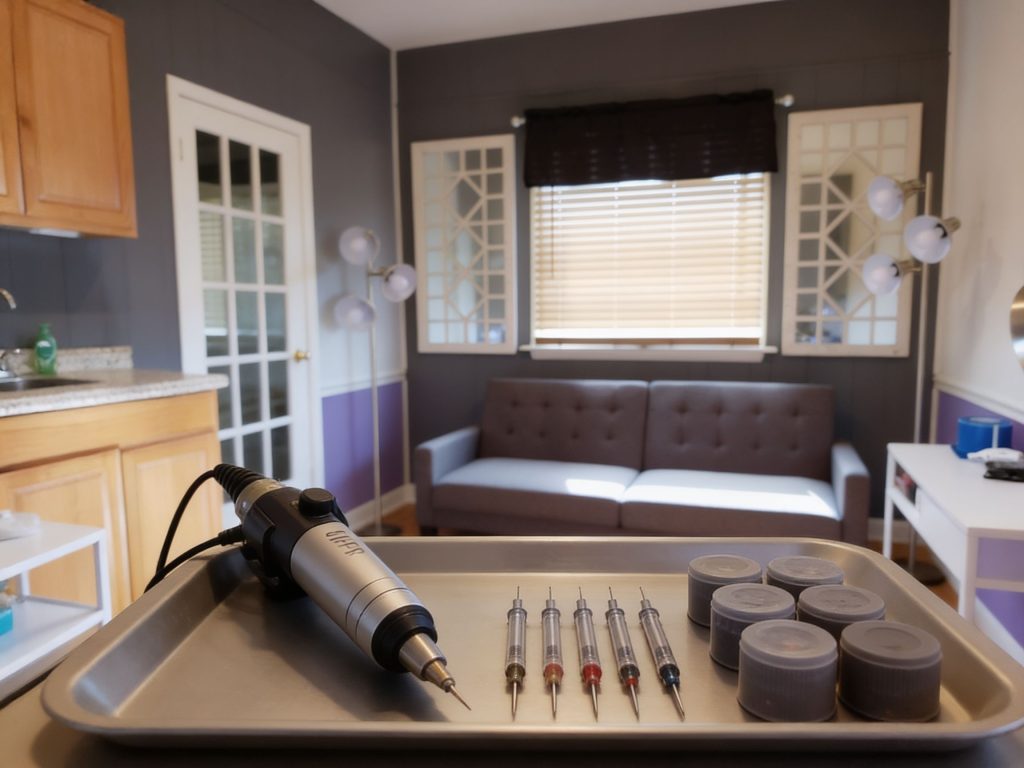
Needle selection is not one-size-fits-all in density work. For the hairline border, where any inconsistency shows immediately, a fine 0.2 mm single-point needle keeps edges soft and realistic. For the crown, temples, and back of the head, a 0.25 mm triple-point needle covers ground more efficiently while still producing individually distinct dots.
The artist cycles the needle at 100 to 150 cycles per second, which controls how the pigment settles into the tissue. Too shallow and the pigment clears within weeks as the skin turns over. Too deep and the dots spread, blur, and can shift colour over time, producing the blue or grey tint that is the hallmark of poor SMP work. Correct depth is everything.
In a density treatment, the artist must also match the pigment tone closely to the client’s existing hair colour. The dots need to blend with the hair follicles already present, not compete with them. A good match at session one is tested under healed conditions before the final density is committed to, which is precisely why most men need two to four sessions spaced several weeks apart.
Who gets the best results from density SMP
Male pattern baldness affects at least 50% of men by the age of 50, but density SMP is not suited to every point on that spectrum. It works best for men who still have reasonable coverage, enough existing hair that the pigment dots have something to blend into. If the thinning is diffuse rather than patchy, and the scalp is visible through the hair rather than completely bare, you are likely in the right zone.
Skin type matters too. Oily skin tends to push pigment out faster, meaning touch-ups may be needed sooner, typically every three to five years rather than at the upper end of the four-to-eight-year range that drier, more mature skin can reach. Faster cellular metabolism and high sun exposure also accelerate fading, while consistent application of SPF 30 to 50 after healing noticeably extends longevity.
There are situations where density SMP is not the right option. Active scalp acne, psoriasis flare-ups, eczema, and keloid-prone skin are all contraindications. Anyone currently experiencing rapid or unpredictable hair loss should stabilise first; if your hair is still changing significantly, locking in a density pattern now means it may not match in two years.
Men who have had hair transplant surgery are actually strong candidates. SMP density work can fill in the gaps between transplanted grafts, soften the appearance of scarring along the donor strip, and give the overall result the fullness that surgery alone often falls short of. This combination can deliver results that neither approach could achieve on its own.
What healing looks like and what to expect long-term
The first four days after each session are the most critical. No water on the scalp, no shampoo, no sweating, no shaving. The pigment is still settling and the skin needs to close cleanly. From days five to ten, gentle washing is fine but direct sun exposure should be avoided. From day ten onwards, normal grooming can resume, and applying SPF to the scalp becomes a daily habit worth building.
Redness typically clears within two to three days. Full healing takes around 30 days, and the final result, the one you are actually judging, is not visible until after that point. The dots soften slightly as the skin heals, which is normal and is accounted for in how the artist builds density across sessions.
A 2025 case series tracking ten patients showed immediate post-treatment visual density scores averaging 8.7 out of 10, settling to 7.7 at six months. That modest fade is expected and is precisely what touch-up sessions address. Swimming pools should be avoided for 28 days after the final session to protect the healed result.
Long-term, density SMP requires realistic expectations: it does not stimulate regrowth, it does not affect the underlying hair loss mechanism, and it will fade gradually. What it does deliver is a consistent, low-maintenance improvement to how your hair looks, without surgery, without daily products, and without committing to a shaved head.
Frequently Asked Questions
Will density SMP look obvious if I wear my hair longer?
Density SMP is specifically designed to work alongside existing hair rather than replace it. The pigment dots sit between your hair strands and are matched to your natural follicle colour. Worn at a short to medium length, the result blends naturally. Very long styles may reduce the visibility of the effect, so it works best at lengths where the scalp is lightly visible.
How many sessions does a male density SMP treatment take?
Most men need two to four sessions for a density treatment, spaced several weeks apart to allow full healing between appointments. The first session establishes the base layer at around 40 dots per square centimetre. Subsequent sessions build density progressively to 80 to 100 dots per square centimetre, with the final result only fully visible after the 30-day healing period.
Does SMP work for men with alopecia rather than pattern baldness?
SMP is used for several alopecia types, including alopecia areata and scarring alopecias, though results vary. Scarring alopecia cases tend to show faster pigment fading than androgenetic cases, as confirmed in a 2025 patient case series. A thorough consultation is essential to assess whether density SMP or a fuller coverage approach is more appropriate for your specific pattern.
How long does scalp micropigmentation for thinning hair actually last?
Results typically last three to eight years depending on skin type, sun exposure, and lifestyle. Oily skin and high UV exposure accelerate fading; dry skin and consistent application of SPF 30 to 50 extend longevity. Most clients return for a touch-up every three to five years. Fading is gradual and even rather than patchy, so the result continues to look natural as it softens.
What should I look for when searching for SMP near me?
When searching for SMP near you, prioritise artists with a verified portfolio of healed density results specifically, not just full-shaved-head treatments. Check for bloodborne pathogens certification and evidence of substantial hands-on experience, ideally 500 or more treatments. Density work around existing hair requires greater precision than standard coverage, so practitioner experience with that specific technique matters significantly.