
You’ve typed “scalp micropigmentation near me” into Google a dozen times now, scrolling through before-and-after photos that all start to look the same. What you actually need isn’t more photos. You need to know how to tell a skilled SMP artist from someone who bought a machine and did a weekend course.
The short answer: good scalp micropigmentation depends far more on the individual artist’s hands and eye than on the clinic’s name or how polished its website looks. Years of building density and hairlines for men and women have shown that the clinics which get it right share a specific set of habits, from how they train needles for different zones of the scalp, to how honestly they talk about longevity. This article walks through exactly what to check before you book, and why state licensing rules make this more complicated in the US than most people realise.
Why practitioner skill matters more than clinic size
SMP is a pointillism technique. An artist deposits tiny dots of pigment into the upper dermis, cycling a needle 100 to 150 times per second, building density gradually from around 40 dots per square centimetre in early sessions up to 80 or more in final passes. Get the depth wrong by even half a millimetre and pigment either fades within months or spreads under the skin into a soft blue-grey blur that never looks like real stubble.
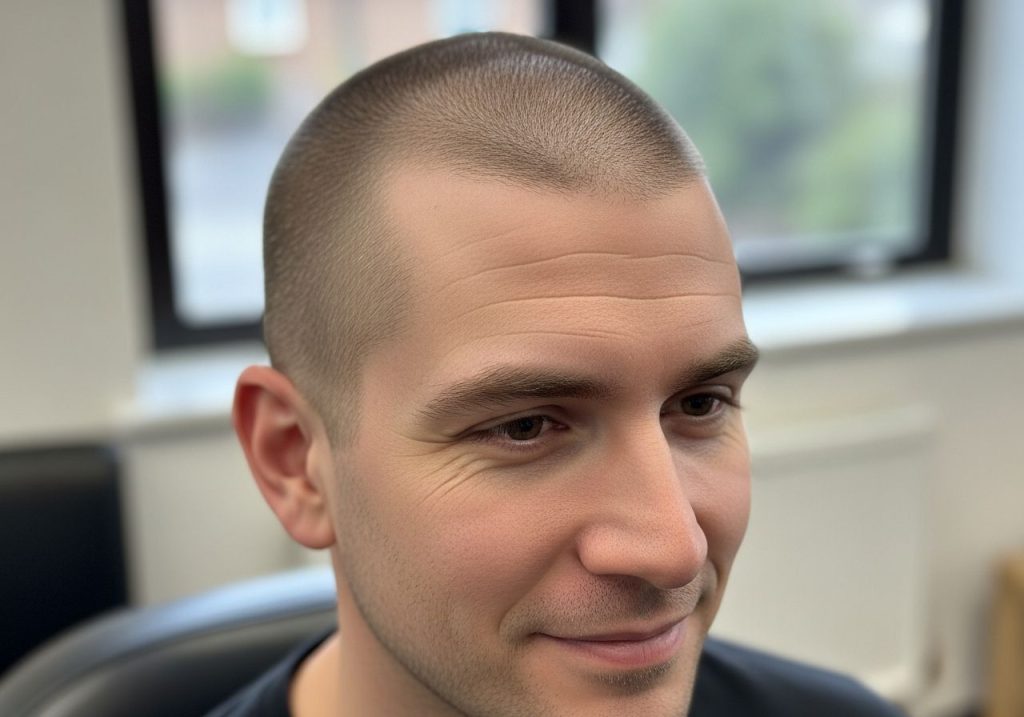
This is why it’s worth remembering: don’t chase the biggest clinic name, chase the artist’s actual healed work. Fresh photos taken minutes after a session look impressive on anyone. What matters is how the scalp looks 30 days later, once swelling has gone and pigment has settled into its true colour. Ask any clinic directly for six-month or one-year healed photos, not just day-one shots. If they hesitate or only show fresh work, that’s your answer.
Needle choice matters too. Hairlines need a fine single-point needle, typically 0.2mm, to mimic the soft, irregular edge of a natural hairline. The crown and sides can handle a slightly thicker triple-point needle for faster density. If an artist uses the same needle everywhere, the hairline often ends up looking too solid, too straight, too obviously drawn on.
How state licensing rules affect who can perform SMP
Here’s something most people researching “SMP near me” don’t realise: there’s no national licence for scalp micropigmentation in the US. The FDA treats tattoo pigment as a cosmetic, not a medical device, which means oversight falls to individual states, and states don’t agree on what SMP even is.
Some states file SMP under general body art or tattoo licensing, meaning your artist needs the same bloodborne pathogens certification and licensed premises as a traditional tattoo studio. Other states classify it alongside permanent makeup (PMU), which can mean different training hour requirements, different inspection standards, or in some cases, almost no specific requirement at all.
What this means practically: always ask which licence your artist holds and under which state category. A body art licence and current bloodborne pathogens certification are the baseline you should expect anywhere in the country. Beyond that, look for genuine experience. Clinics with high standards often require artists to log hundreds of procedures before working independently, and that kind of repetition is what separates a natural-looking hairline from one that reads as a hairpiece from ten feet away.
Questions worth asking during your consultation
A proper consultation should feel like a real conversation, not a sales pitch. Bring a list and expect direct answers.
- How many sessions will I need, and why? Most people need two to four sessions spaced one to three weeks apart, with each session lasting one to five hours depending on the area covered.
- Can I see healed results from clients with my skin tone and hair loss pattern? Scarring alopecia, male pattern baldness and diffuse thinning in women all heal slightly differently.
- What’s the total cost across all sessions, including any touch-up built into the plan? Total cost varies widely by coverage area, so get the full number, not a per-session quote.
- How long do results typically last? Expect a range of four to eight years before pigment softens enough to want a touch-up, with most people returning every four to six years.
- What does aftercare involve? A clinic that skims past this hasn’t thought hard enough about your healing.
If a consultation feels rushed, or the artist can’t answer specifics about needle depth, dot density or their own training history, keep looking. You’re not being difficult. You’re protecting a result that sits on your scalp for years.
What healing and long-term maintenance actually look like
Healing follows a fairly predictable pattern regardless of which clinic you choose. For the first four days, no water on the scalp, no shampoo, no sweating, no shaving. Days five through ten allow gentle washing but no sun exposure. From day ten onward, SPF becomes part of your routine and you can return to normal grooming, though swimming pools stay off-limits for a full 28 days while pigment settles.
Full healing takes about a month. Initial redness usually fades within two to three days, but the scalp needs the entire 28-day window before pigment has properly settled into the dermis. SPF 30 to 50 afterwards isn’t optional if you want your results to last, since sun exposure is one of the main things that accelerates fading.
None of this restores hair growth or affects existing follicles. SMP is camouflage, not a cure for balding. It works by reducing the contrast between scalp and hair, which is why it suits male and female pattern hair loss, alopecia, transplant scarring and chemotherapy-related thinning equally well. Compared with a hair transplant, it’s less invasive, involves no surgery, and costs a fraction of the price, though it’s a cosmetic result rather than a biological one.
Once you’ve found an artist whose healed portfolio convinces you, whose licensing checks out, and who answers your questions without flinching, the next step is simple: book the consultation. Bring photos of hairlines you like, ask to see the artist’s own healed work in person if possible, and get your session plan and total cost in writing before you commit to a date.
Frequently Asked Questions
How do I know if an SMP clinic near me is reputable?
Check for healed photos at 30 days or later, not just fresh results. Confirm the artist holds a body art or tattoo licence with current bloodborne pathogens certification, and ask directly how many procedures they’ve completed. Reputable artists answer these questions without hesitation.
Is SMP regulated the same way in every US state?
No. Some states classify scalp micropigmentation under general body art or tattoo licensing, while others group it with permanent makeup, which can carry different training requirements. There’s no single national standard, so always ask which licence category applies in your state.
How many sessions does scalp micropigmentation usually take?
Most people need two to four sessions, spaced one to three weeks apart, with each session lasting between one and five hours depending on the area being treated. Density builds gradually across sessions rather than being applied all at once.
How long do SMP results last before needing a touch-up?
Results typically last four to eight years before noticeable fading occurs, with most clients returning for a touch-up every four to six years. Sun exposure, skin type and aftercare all affect how long the pigment holds its depth and colour.
Can scalp micropigmentation help with hair loss from alopecia or scarring?
Yes. SMP is commonly used for alopecia areata, alopecia totalis, and scarring from previous hair transplants, since it camouflages contrast between scalp and hair rather than requiring active hair growth. It works well for both patterned and diffuse hair loss.
Ready to talk it through?
Carolina Scalp Center in Raleigh offers a personal consultation to answer your questions and recommend the right approach for you. Get in touch with Carolina Scalp Center to book your consultation.